

What Is An ACL Tear?
The anterior cruciate ligament (ACL) is located in the knee and can be injured or torn when it is harshly twisted in the wrong way. ACL tears are especially common in athletes, including those who participate in sports such as gymnastics, football, soccer, tennis, or downhill skiing. All these sports require sudden stops and changes in direction, making the risk higher for twisting the knee the wrong way and sustaining an ACL injury.
An ACL injury is painful and debilitating. Those suffering from this type of injury typically experience severe pain, swelling, limited range of motion, and instability when trying to bear weight. Fortunately, our East Brunswick and Lake Como, NJ physical therapy services can help treat your ACL injury and provide some much-needed relief. Request an appointment today if you are suffering from an ACL Injury.
According to GetPT1st, “research shows that 26% of non-contact ACL injuries could be prevented by specific exercise programs.” At Mana Physical Therapy, we are dedicated not only to helping you recover from your ACL injury, but we are also able to help you prevent further injuries from occurring in the future. Our East Brunswick and Lake Como, NJ physical therapists will conduct several tests to gauge your injury risk, such as the Landing Error Scoring System (LESS). This is a jump-landing test, used to determine whether or not you are at high-risk for a non-contact ACL injury.
About Posterior Cruciate Ligament (PCL) Tears
The posterior cruciate ligament (PCL) is an important ligament that checks the backward sliding of the tibia bone on the femur bone in the knee. This ligament can be injured with sports or falls, especially with blows to the front of the knee while the foot is planted on the ground.
The PCL can be sprained which means it is still intact. If ruptured it means it is completely broken. When a PCL injury involves a sprain, there is typically swelling that occurs in the knee and a feeling of instability with walking. Sprains are classified according to their severity with grades 1 through 3. Grades 1 and 2 are often treatable without surgery, while grade 3 is most often a complete tear and typically requires surgery.
With a sprain, the ligament is overstretched and micro-tearing results, causing pain and inflammation. There is little blood flow to the ligaments and they get most of their nutrition from the joint fluid. This means, that their healing is a lot slower than most other tissues. Depending on the severity of the sprain and joint stability the potential for future injury can increase.
With grade 3 PCL tears, surgery is most likely needed to repair. Physical therapy is vital to the rehabilitation after this surgery. Recovery does take time and the goal is to protect the surgery site, maintaining stability while getting back into walking and eventually running.
How physical therapy helps
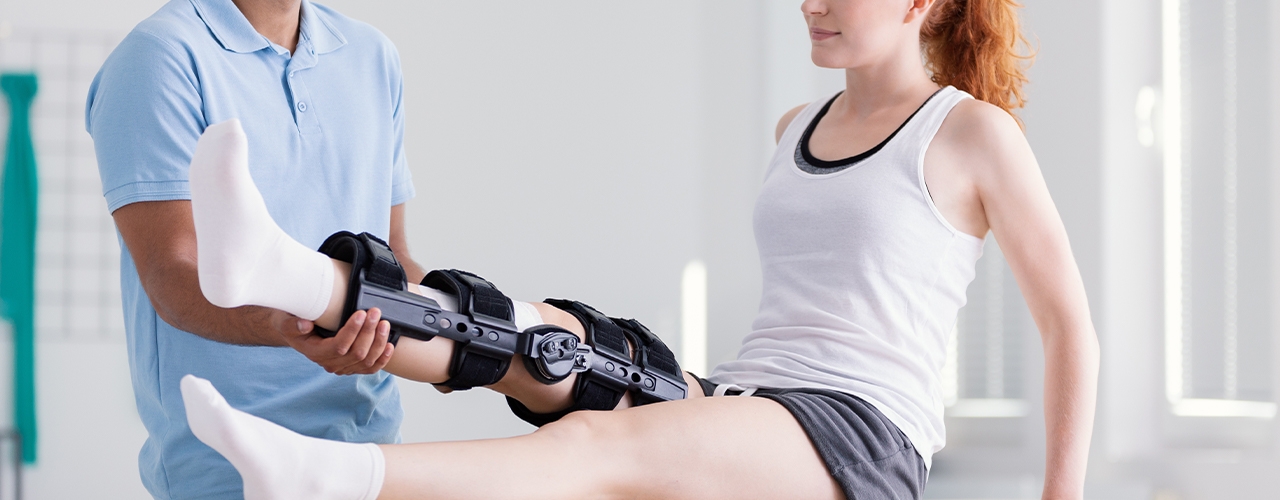
Our physical therapists work with patients of all ages, especially those who have sustained ACL/PCL tears through sports activities. We work closely with your physician to examine the stability of your knee after the ACL/PCL injury. There are specific tests that we perform to assess how stable the ligament is and what course of action is best to resolve your pain and return you to activities as soon as possible. Most grade 1 and grade 2 sprains can be rehabilitated without the need for surgery and our physical therapists will discuss your options.
If surgery is needed for your recovery, rest assured that you are in the right hands for your rehabilitation. We work closely with your physician’s rehabilitation protocols. The priority is to manage your pain and swelling after surgery, gradually increasing your range of motion in the knee per your post-surgery protocol.
As time progresses, we work with you to gain your strength back in the knee, improve stability of the joint, get you back to walking normally and eventually back into advanced movements including running. Call us today to discover how we can help you bounce back after a ACL/PCL tear.
Here’s What To Expect During Your ACL/PCL Exam:
After diagnostic tests and physical examinations are complete, our physical therapists will design a specialized treatment plan based on your specific needs. Your treatment plan may include a combination of methods, including manual therapy, ice and heat therapies, ultrasound, or targeted exercises, all aimed at providing relief and rehabilitation.
Get Started On Your Recovery Today!
If you are suffering from an ACL/PCL injury, contact Mana Physical Therapy today to schedule your initial appointment. We will get you started on your path toward recovery and long-lasting relief!
Your Next Steps…
Request An Appointment
Receive A Custom Treatment Plan
Work Hard and Progress In Your Recovery
Recover & Enjoy Life Pain-Free!